

Category: Uncategorised
Community fund awards first grants
Wigton-based CCL secure, the global expert in polymer banknote substrate, has awarded its first grants from its new charitable fund that benefits people and communities in Allerdale and Copeland.
Managed by Cumbria Community Foundation, the CCL Secure Fund has supported five community groups across West Cumbria.
 The gym at the Oval Centre in Workington, which is run by social enterprise, Fit 4 Life, received £1,000 towards new equipment. Fit 4 Life offers a safe and friendly environment for people with chronic health conditions and is a low-cost alternative to mainstream fitness centres. (Image – Times and Star)
Dougie Pomfret, Manager at Fit 4 Life said: “We have been able to purchase two new exercise bikes with the grant, which will make our clients experience with us even better than it was before.
“We have lots of sessions on offer including cardiac, stroke and pulmonary rehabilitation, over 50’s sessions and sessions for general public. People with a range of health conditions such as high blood pressure, weight problems, diabetes, heart disease and more can join, and our team of specialist instructors are there to guide people back to fitness.”
 Wigton Youth Station received £1,273, which contributed to keeping the centre open for the next year. It has been established for 21 years and provides a safe, social space for local youngsters in the area twice a week. Angela Bicknell, Centre Manager, said: “We’ve been very lucky to receive such support and I’m happy to say the Foundation has been a long-term supporter of the work we do.
“On average, we have 25-30 young people through the doors on any one night, with over 70 members in total. Wigton Youth Station is well equipped and experienced in addressing and working alongside our young people, their families and their communities. We work on prevention and early intervention to provide information and support, to change negative attitudes and their long-term prospects.”
Other organisations to benefit include Wigton Baths Trust and 3rd Wigton Sea Scout Group, both receiving £1,000 each and North Allerdale Development Trust received £2,000.
Mark Lancaster, HR Manager-EMEAC, said: “The community is essential to the success of the CCL Secure plant and we are delighted to have confirmed our first grants from the CCL Secure Community fund. The whole team at CCL Secure are looking forward to making a sustainable impact across Cumbria over the months and years to come.”
Annalee Holliday, Grants Officer at Cumbria Community Foundation said: “This is an exciting time for us to be working with Mark and the CCL Team, who like many Cumbrian businesses are committed to finding ways to help their community. These organisations play a big part in holding communities together especially during times when local services are under pressure and struggling to meet local needs.”
For more information about the fund or to apply, visit www.cumbriafoundation.org/fund/ccl-secure-fund or call the grants team at Cumbria Community Foundation on 01900 825760.
It’s time to talk in West Cumbria
People struggling with mental health issues on the west coast now have somewhere to go for support following the closure of Mind in West Cumbria last year.
Together We CIC, a not for profit organisation, which provides mental and physical health support for people of all ages, has received £100,000 from United Utilities, Sellafield Ltd and Cumbria Community Foundation towards the Together We Talk project, which will provide one-to-one and group counselling as well as family support services.
The announcement coincides with the national Time to Talk day, held on 6th February, which encourages people to talk about mental health.
The funding, which was distributed via Cumbria Community Foundation, has come at a critical time when demand for support in this area continues to grow as statutory mental health services are affected by cuts and are stretched to capacity.
Mental health is not the taboo subject it once was, but the number of people diagnosed with a mental health condition continues to rise. 1 in 4 people will be affected by a mental health problem in their lifetime, with 1 in 6 adults being diagnosed with a mental health problem each year. West Cumbria also has a higher number of people admitted to hospital following intentional self-harm than the national average. The problems are particularly acute in Copeland, which has the highest suicide rate and the second highest number of A&E admissions for mental health conditions in the county.
Janine Ward, Director, said: “We pride ourselves on delivering evidence-based interventions with qualified, insured and supervised staff. We have good connections across the region and will have a base in both Workington and Whitehaven. Our aim is to empower people to take control over their mental and physical health and wellbeing.
“The team will be made up of counselling, CBT, mental health practitioners and support workers to enable a full service with a range of interventions available. Access to our service can be via self or professional referral by emailing referral@togetherwe.co.uk or by telephone 01900 66375.”
Louise Beardmore, Customer Services and People Director at United Utilities, said: “Mental Health provision is such an important area that we’ve been working hard over recent years to break down barriers and to make it easier for our own employees to access the help and support they might need one day.
“We are committed to supporting the wider communities where we work and that’s why I’m so pleased to help fund this new scheme. With our call centre at Whitehaven and our new water supplies project, we are very much a part of the fabric of life in West Cumbria.”
Gary McKeating, Head of Community and Development at Sellafield Ltd, said: “The importance of the Together We Talk project cannot be understated. I am delighted that the project has been formed from the ashes of its predecessor and that Sellafield Ltd, along with United Utilities and the Cumbria Community Foundation are able to support it. The scheme will provide much needed mental health support and guidance to those in our area who need it most.
“Whilst mental health is a topic people are now more willing to talk about, it is important that they can do so with trained workers, who can help people in times of difficulty. Our funding makes this a reality.”
Annalee Holliday, Grants & Donor Services Officer for Cumbria Community Foundation, added: “Mental health issues can affect people from all walks of life. The Foundation supports local projects that provide a lifeline for people with nowhere else to turn, whether they are recovering from trauma, addiction or mental breakdown, or coping daily with stress, depression, anxiety or loneliness.
“Each year, we receive hundreds of grant applications from charities and groups across Cumbria, but it has become noticeable that the number of mental health projects requiring support has been increasing. Following the closure of Mind in West Cumbria, we have had long discussions with other providers in the county and made the decision to set up the mental health fundraising appeal, which will provide grants to projects across West Cumbria: https://www.totalgiving.co.uk/appeal/westcumbriamentalhealth”
A referral form with more information about Together We services is available at www.togetherwe.co.uk.
Supporting Cumbrian Farmers when they need it most
Helping to maintain and develop a sustainable farming community in Cumbria and the Yorkshire Dales, was the aim of The Farmer Network, when it was formed in 2006.
Since then, it has been raising the profile of farming, as well as encouraging collaboration between farmers and helping them to apply for funding for training and development courses.
Based in Penrith, it now has more than 1,100 members. The Foundation has supported it from its very beginning when during times of hardship in the years following the foot and mouth epidemic in 2001, it provided help and support to farmers where it was most needed.
The Foundation has provided ongoing funding support worth more than £175,000 to farmer initiatives including its training voucher scheme, farming landscape and fell gather events and most recently, the Business Support for Young People Programme.
 The first grant helped to establish the Farmer Network. The funding helped towards promotional costs including a new website, training workshops for farmers, school visits and farm walks for the general public, team member training and organising and managing a training programme for nine young people to become employed farm assistants.
One of its aims is to encourage young people aged 16-25 to get into agriculture and set themselves up as self-employed farm assistants. Farming and forestry together contribute around 3% of total employment in the county and the average age in the farming community is often quoted as nearing 60.
Then came the Cumbria Farm Assistant Scheme, which involved training in a wide range of technical skills, including tractor driving, basic animal care, health and safety, basic farm maintenance and business skills, such as self-employment, finance and marketing. The youngsters were also able to apply for training vouchers through the Network to help pay for training.
 Elizabeth Moore, Training Co-ordinator, said: “Every course taken provides a vital skill to help these young people become more safety-conscious, efficient food producers of the future. Training to take the trailer-handling test is essential for the young person to be able to take livestock from the farmstead to outlying fields or to auction themselves, freeing up other family members to do other work.
“Those who have taken the sheep shearing course can hire out their skills to other farmers who can trust their ability to handle the sheep safely. One young farmer told me, very proudly, that for the first time he been able to shear all his father’s flock after attending the shearing course.”
 Further grants provided vouchers worth £200 each year to people aged between 15 and 40 to spend on training courses needed to work safely on farms, while also improving employability among young farmers. Nearly all the applicants come from farm families that are under severe financial pressure – a quarter of farms have an income of £20,000 or less, with upland grazing livestock farms facing the greatest financial struggles.
James Hodgson, a farmer from Bampton, received a training voucher to enable him to subsidise the cost of trailer training. He said: “The scheme was very beneficial and the administration simple. I wouldn’t have been able to afford to pay for my trailer test without the voucher. Passing the test has allowed me to transport equipment and livestock, such as taking my cattle to shows and auction marts, which improves the viability of the farm.”
Liam Braithwaite from Scales Farm, near Penrith, said: “The £200 Training Voucher gave me the opportunity to gain a licence sooner than expected as it is very expensive to operate a 360 digger. This has given me more options with work as I am now qualified to work on sites away from the farm as well.”
 Other initiatives the Network offers include Fell Gather events, which promote sustainable communities through sustainable energy and recycling and attracts around 1,500 people each year.
As well as supporting farmers directly, the Network also aims to help them by educating people in more urban areas about farming, food, the environment and local, rural communities. The farming road shows are run by volunteers, who are members of the Network, and are trained in how to interpret different aspects of farming to the general public. The events help increase knowledge about farming, food and the landscape.
The Storm Emma Hardship fund was set up with grants from Cumbria Community Foundation in response to the devastating snow and wind conditions experienced in Cumbria in early 2018. The Farmer Network administered the fund, awarding more than £30,000 to 79 farms.
The Farmer Network administered the fund, set up in recognition of the hardship faced by households impacted by the extreme weather and was not a compensation scheme with awards typically between £250 and £500, with a small number of the worst affected households getting £1,000. Almost 80 farms were supported.
 More recently the Network started The Business Support for Young People programme for 18- 30 year olds who have a farm-related business idea but are limited by the resources or opportunities available to them. It offers business planning, one-to-one support from an experienced farm business adviser and the chance to apply for a low interest loan and training grant, plus ongoing support from a volunteer business mentor.
Farmer Network Project Manager, Kate Gascoyne, said: “The first group will be started in October 2019 and we want to hear from young people who are keen to develop a business idea related to farming. We are delighted to receive this grant which, in these uncertain times, we will use to guide and support these young people to enable them to become the future of farming in Cumbria.”
A confident future
Imagine not being able to work, play sport or socialise. There are many people in our community who feel excluded from enjoying these things which most of us take for granted.
More than 7,000 adults in Cumbria have a learning disability. Many feel isolated and wouldn’t take part in activities outside their comfort zone. However, due to the support of Carlisle Mencap, its 400 service users across the county are looking at a more confident future and a sense of improved well-being.
 Tim has come on leaps and bounds since he started attending Carlisle Mencap, so much so that he also helps the team leaders on day trips and at activities. Tim was a very shy youngster when he first started attending Carlisle Mencap. Now in his teens, he has gradually improved his sense of well-being and his confidence. He has become a lot more independent by taking part in projects run by the charities award-winning studio facility, based at its Grace Little Centre for children. The studio produces animation and films, arts and crafts projects, including work for exhibitions. A great example of how Tim has grown in confidence is that he was happy to be interviewed by the local media when a film made at the studio won the National Crimebeat Award. Tim has also taken on some part-time work outside Carlisle Mencap and has developed into a mature, happy, confident individual and his team leaders and support workers can’t speak highly enough of him.
 Carlisle Mencap has received more than £75,000 from Cumbria Community Foundation since 2002. The first grant received was to run pilot activity sessions for young people, aged 13 and above. From then on, grants have supported the employment of care workers, a weekend youth club, toys and equipment, a bi-weekly club for 8 – 18 year olds with learning and/or physical disabilities in the Wigton and North West Allerdale area, and the Activate Sports Development programme, which helps people with learning difficulties join in with mainstream exercise.
Carlisle Mencap was established more than 50 years ago, by a group of parents who wanted to provide a number of quality services for young people with learning disabilities and their families to make life easier.
 It provides a wide range of services including children’s activities, adult and children’s community services, including outreach support and supported living, a rights and advice service, and a Cumbria autism family support project. Respite is available to children and young people 24 hours day 365 days a year at the Grace Little Centre and for adults at California House. The charity also runs Doves Café on Chapel Street and a shop on Botchergate, both of which are run by clients and supported by a small team of volunteers.
Its Activate Sports Development programme is designed specifically for people with learning and physical disabilities. It uses sport to develop physical and social skills, promote self-esteem, improve physical well-being and general health, and empower people with a learning disability to be more confident and happier.
One young man who is autistic was initially extremely anxious, unsettled and reluctant to join in. With encouragement, guidance and a routine, he became an integral part of the group, enthusiastic and noticeably fitter. Over 40 members have benefited from the project, increasing their social circle and now feel included in mainstream activities outside of their comfort zone.
The project has given people the chance to get fit and exercise in a supported environment. It started with playing football, then a snooker night and then gym sessions with specially adapted equipment to provide inclusive Crossfit sessions.
Dan Campbell, Sports Development Officer, said: “Our guys come from a learning disability world that is small and without access to exercise. We’re taking them into the wider community and encouraging them to exercise like everyone else.”
31 year old Carl is enjoying his new found fitness: “I go with people who have disabilities and make new friends. I have lots of friends now. It’s really nice. I feel more confident in myself than before. I’m getting really good at things, when I started I could only do five press ups and now I can do 20. I struggled to do sit ups at first and now I can do 15. We do circuits, six stations, six circuits with 45 seconds on each.”
 Earlier this year, the charity celebrated its 50th birthday and Chief Executive, Sheila Gregory, is proud of what has been achieved over the years. She said: “Over 50 years we have grown into a large charity with over 150 staff and 400 services users across Cumbria. Although many things have changed for the better, there are still terrible injustices to fight against. We are still campaigning. The inequalities are still there, but hopefully the inequality will get better – one being the dreadful statistics on the early deaths of many people with learning disability.”
Helping turn lives around
Project John is based in one of the most deprived wards in Barrow and many of the youngsters that it meets have never had the skills or opportunity to take part in local activities.
More than £22,000 in grants has helped turn the lives around of its most hard to reach young people, by giving them real opportunities to grow self-esteem and self-worth participating in community activities.
Project John, is a supported housing project and drop-in centre for 16-25 year olds. It has been providing accommodation, support and training to young people for housing related issues as well as teaching them independent living and employability skills since 1993.
Its first grant administered by the Foundation was awarded in 2009. The grant was used to fund a confidence building trip to Manchester for a group of young people, some of which had never been out of Barrow.
 Many of the young people Project John works with are either single or parents with babies. They have no experience of managing their finances even though they live on a very small budget. Another grant funded its ‘Keep you warm’ project, providing young people with the skills to produce home cooked meals, as often young people come to Project John, with no cooking skills and live off unhealthy food.
Nicola Kell, Project Manager, said: “Evidence showed our tenants were unable to sustain having a warm flat during the cold winter months on their limited income. Tenants have a budget of £52 per week and out of this money they must pay for gas, electricity, water, TV licence, clothing and food.
“The grant meant that we could fund cooking courses to provide the tenants with lasting skills in how to eat economically and healthily. A £10 voucher was offered as an incentive to complete the course, which could either be used towards their gas bills or the purchase of a warm, winter coat.”
Many of its young people lack confidence and have low self-esteem and need help with dealing with drug and alcohol abuse. A grant for its Summer Programme helped to get 24 young people off the streets and actively involved in organising and taking in part in a range of their chosen activities to help build life skills and community cohesion.
 In 2012, 12 young people travelled to Portsmouth by train to join the tall ships for a theory week on board a training boat, and in 2013, 10 young people spent a week sailing around the UK on the Ocean Youth Trust’s 72ft Challenger Yacht.
“These activities greatly increased the young people’s confidence and self-worth. They learnt communication skills and how to work as a team and it gave them an opportunity, they would never have prior to this grant,” said Nicola.
In 2018, Project John opened a ‘Hub’ on Cavendish Street, which includes a coffee shop, a family room, training kitchen, ICT facilities as well as space for other charities. It offers support and guidance for young people, including housing and benefit advice, accommodation advice, debt management and budgeting, employability skills, parenting skills, independent living skills, legal advice, early help assessments, meetings and contact sessions.
 Project John also applies for funding for its individual tenants. Take Ryan for example, he was a young homeless man living in supported accommodation with Project John. He had a bad start in life and has no support from his family. Ryan decided it was time to turn his life around and started attending college but had some setbacks with minor offences. After taking an interest in sailing, he wanted to take part in the Jubilee Sailing Trust’s voyage around Malta. He received a bursary towards the cost of the trip but was unable to meet the total cost.
A grant of £295 meant that Ryan could go on the trip. The grant covered the cost to meet the ship in Malta and covered payment for his passport and an overnight stay in a hotel.
Nicola said: “Through sailing, Ryan has developed leadership skills, communication skills and teamwork, all skills which will enable him to seek employment in Barrow. Ryan is a role model for other young people in our community that face disadvantage and he will be encouraging other young people to try new experiences.”
Funding available for overseas travel
Young people who are wanting to travel abroad and experience foreign culture can apply for funding towards the cost.
The Mary Grave Trust was set up in 1971 by Burton Dunglinson in memory of his mother, Mary Grave, who was from Maryport. Having worked in America in the 1920s, Mr Dunglinson was aware of the value of travel for young people.
The trust began working with Cumbria Community Foundation in 2005. It awards an average of £55,000 each year, supporting more than 70 young people, primarily from West Cumbria.
Young people aged 11-21 can apply for up to £1,200 if they are travelling abroad through educational or youth group trips, work experience or gap year activities. Priority is given to those living in Workington, Maryport and Whitehaven areas and is means-tested, meaning household income must be £594 or less per week.
Most grants fund school trips such as language trips to France and Spain or art and religious studies trips to New York. Other activities supported include work experience in Spain, peer education in The Gambia, a maths winter school in Singapore, an expedition up the Amazon and a guide exchange visit to Eastern Siberia.
 Mark Bailey, Deputy Headteacher at Netherhall School, said: “I have organised more than 30 international trips over the last two decades and during that time, hundreds of our students have benefited from the support of the Mary Grave Trust. Seeing at first hand the seminal experiences gained by our students has been a true joy; our school cannot thank Cumbria Community Foundation enough for the support it has shown to our young people and the phenomenal experiences it has provided. The impact that the foreign tours have had on each and every student has been incredible.”
Year 13 student, Chloe Lambert, said: “Without the Mary Grave Trust, I wouldn’t have been able to visit New York and fulfil my dreams of going to such a magical city. What the Trust does is remarkable, and I will be forever grateful to it.”
Gary Higgs, Grants & Donor Services Officer at Cumbria Community Foundation, said: “The Mary Grave Trust, which is now worth £1.8 million, is a great example of local philanthropy and how one man has left a lasting legacy for local young people to enjoy for years to come.”
If you would like to apply for a grant, contact Cumbria Community Foundation on 01900 825760 or visit: Mary Grave Trust Fund
Inspiring the next generation
Excitement is in the air. It’s a warm September evening and young people at the Phoenix Youth Project are waiting for two positive role models to join them for a fun-filled fashion shoot.
 Too many young people in Cumbria grow up without positive words. Role models can play a huge part in our lives, we can all remember a family member, teacher or sports star that either lit our imaginations or provided an encouraging word. That’s why staff at the Phoenix Youth Project (PYP) decided to do something about it. Founded in 2003, each year, 700 young people access its community-based activities in Cleator Moor, Frizington and Moor Row.
The charity has received nearly £200,000 in grants from Cumbria Community Foundation since 2004 when a grant supported the start-up of its community-based learning centres. Since then, grants have supported core costs, residential trips, educational courses, including first aid and health and hygiene training, social action projects and the Phoenix Role Models.
 In 2016, PYP received a grant to run Phoenix Role Models. Local professionals attend youth work sessions to share career stories and give advice to the youngsters. The positive role model sessions are all about helping young people to realise their potential, give confidence and to inspire and motivate, and show that they can live their dream.
 Running this session is Amy and Louise, local entrepreneurs who changed careers after having families to run a fashion business called Ruby & Bean. The energy was high and during this session, everyone had the opportunity to join in, whether it was as a fashion model, reporter, photographer or lighting assistant. Everyone had a role to play and the chance to experience what it’s like to be involved in a fashion shoot.
 After a chat about working in fashion and trying on outfits, the young people got to grips with the cameras before heading out into Cleator Moor for a photoshoot. After an hour of fresh air, a good laugh and lots of posing for the camera, spirits were high and confidence even higher, even for the shyest.
Conversation is free flowing. Career aspirations are discussed: “I want to be a photographer when I grow up, I love this!” Confidence is boosted: “I love the clothes, thank you for your time and for being so kind to me, it’s boosted my confidence.”
 Amy and Louise said: “It has been fantastic to share our experiences and business as part of Phoenix Role Models. Seeing the children engage in what we do and really getting involved was incredibly rewarding.”
Luke and Emily who attend the older youth group said: “The role model sessions are excellent, we get to talk about careers, current affairs and experience new things, that we would never have had the opportunity to do anywhere else.”
Paul Rowe, Project Manager of PYP said: “The role models project has helped young people realise their potential, build up an understanding of the possible pathways into work and success, and believe their background is not a barrier.”
 For the last 16 years, a dedicated team has worked with some of the most disadvantaged 8 to 19-year-olds in and around Cleator Moor, to help them raise their aspirations, develop positive behaviour, and encourage them to lead healthier lifestyles along with tackling crime and anti-social behaviour.
 The project is also supported by more than 10 volunteers, many of whom have grown up attending the sessions. One volunteer said: “I wanted to give something back because the club really helped me. I was doing stupid things like throwing eggs at cars, just because there was nothing else to do. This place gave me something else, activities and something better to do than being stupid and getting into trouble. I don’t think I’d be doing what I’m doing now if it wasn’t for the centre. I’d have gone on throwing eggs at cars and ended up in trouble like some of the mates I had then. If you ask a lot of the kids here, they’ll tell you they’d be in trouble is it wasn’t for this place.”
The 12 weekly evening sessions focus on personal and social development, supporting and challenging young people appropriately when needed. Speaking to some of the young people, it’s apparent how much the project means to them and the impact it’s had on their lives. Mia said, “I have met new friends and I look forward to coming every week”.
Emily and Billy Jo said: “We look forward to Friday night when we can have fun with our friends in a safe environment. It’s a special time with special friends.
 Chloe and Charlie said: “We love playing air hockey and of course the basketball court and the fact that there are lots of people to play with, we are never on our own. If it wasn’t for the youth club, we would just be inside playing on the computer.”
 Supporting young people can make a massive impact on their lives and the lives of their families. A thankful parent said: “His confidence and self-esteem have reached an all-time high thanks to the warm and guided atmosphere that his youth club provides. Before he began, he lacked self-confidence and had low self-esteem. The youth club has restored his confidence to such a degree that he feels completely comfortable interacting with adults and his peers. We can’t thank all the staff at the youth centre enough for what happens every time he goes to the club. He always returns, happy and contented and eager for the next session!”
Supporting the young people of Cumbria
Based in Workington, Cumbria Youth Alliance (CYA) was set up in 1997 and has received over £300,000 from Cumbria Community Foundation since 2003. Each year, it works with around 2,000 young people around the county, focussing on the most deprived areas, to help them reach their full potential.
 One such project is the Friday Night Project. Originally set up by Inspira, CYA started delivering the project in 2017 when Inspira pulled out. Running in collaboration with other youth organisations in Allerdale, it has had an appreciable impact on anti-social behaviour rates across the borough. Each organisation offers different youth-led activities in venues on a Friday night. Young people aged between 11 and 19 come together to enjoy a wide range of activities such as team games, quiz nights, craft sessions and cookery workshops.
The number of young people at risk of being NEET (not in education, employment, or training) is higher than the national average in West Cumbria. The ‘First Steps to Employment’ project offers one-to-one support for young people in West Cumbria to address issues and barriers to engagement in education, training and work. Each young person develops their own action plan to identify the ‘steps’ needed to reach their employment goals and identify and achieve their aspirations.
 Cath Clarke, Chief Officer of Cumbria Youth Alliance, said: “All young people have potential, but those born into disadvantage face an uphill struggle from the start. Many fail at school and later, are unable to find or keep jobs and end up in a spiral of long term unemployment and benefit dependency.
“Access to positive activities really assists with ensuring young people make a successful transition into adulthood. They become more engaged and we notice marked improvements in their behaviour. Many young people started on the programme as beneficiaries and have now moved into volunteering positions, helping more young people to benefit in the communities.”
CYA has delivered many different projects over the years. One such project, ‘Get Up; Set Up’ was supported by the #iwill Fund, which encourages youth social action, and gave groups of young Cumbrian’s the chance to take an active role in their communities. Some of the projects that have been developed include: painting and decorating a local community centre, visiting elderly residents in a local care home, and developing the community garden at Florence Mine.
The ‘Every Young Voice Counts’ project received funding to engage young people in the democratic processes and structures. It was designed to generate interest in how local decisions are made and how young people can influence these decisions. A series of democracy workshops were delivered to more than 350 Cumbrian youngsters in schools and youth clubs.
Another grant supported a mental health and emotional resilience project, called ‘With the Future in Mind.’ The project trained a network of young people in secondary schools and colleges across West Cumbria as peer leads around the emotional resilience agenda. Pupils became Mental Health First Aid champions and will support their fellow peers in years to come. This is the ultimate legacy; with young people having a greater understanding of what constitutes good mental health and emotional resilience.
Young people face many challenges as they move into adulthood, but for the 2,000 youngsters who benefit each year from CYA’s support, they become better equipped as they go on in life and learn some of the skills needed to improve their life chances and aspirations.
Giving hope to the homeless
Behind a row of terraced houses on the outskirts of Egremont lies a sanctuary. An allotment run by Calderwood House, a homeless hostel providing up to six months respite for those in need.
 Historically in West Cumbria there has been little or no provision for homeless adults who do not fall into the ‘priority’ category in the local authority. This often means a life of sofa surfing, living in unsafe conditions, being subject to exploitation and living rough on the streets. Without a fixed address they cannot get work or access to training so are unable to start rebuilding their lives.
Since opening in 2015, Time to Change (West Cumbria), which runs the hostel, has helped more than 170 people get back on their feet. For many who are supported by the social enterprise, this is a place to relax, learn new skills and be with new friends.
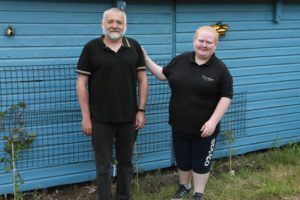 In 2018, a £7,000 grant helped set up the allotment project. Under the supervision of support worker Carla, residents grow vegetables that are then used in the kitchen. Working as a team, it provides a support network to deal with issues such as isolation, depression and low self-esteem.
This little oasis of peace offers a place to go when residents need some time to reflect and gather their thoughts. In the allotment, not only will you find fruit, vegetables and flowers, a cherry tree flourishes in the corner. It was recently planted for a resident who lost his life – a tragic story that will never leave the devoted team. Their energy, motivation and commitment to help people is commendable.
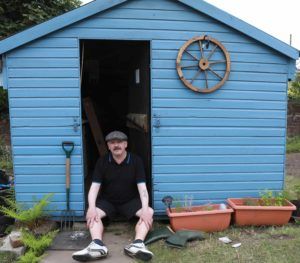
 Sat in the shade of the potting shed is a former resident who now volunteers at the hostel. He became homeless after a sudden stroke had took away his ability to communicate while on holiday. After months in hospital recuperating, he returned to Cumbria to find he had lost his job and his home.
Billy, 26, became homeless when his family circumstances changed after a tragic incident. Not only was he subjected to a savage attack, he had also been living without gas and electricity for a year. He said: “It wasn’t safe for me to stay at home, I had nowhere to go.” Billy spent months at Calderwood House recovering. Since moving out, he now has a house nearby. He still enjoys visiting the Calderwood House team most days. They continue to support him, including helping him to apply for an online university course.
At Calderwood House, residents learn to live together in a community, sharing the cooking and cleaning, as well as developing skills and knowledge through work experience and training. You will often find residents helping in the community, including street cleaning and litter picking. One of the conditions of their stay is they stay free from drugs and alcohol, and testing is carried out.
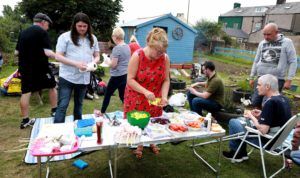
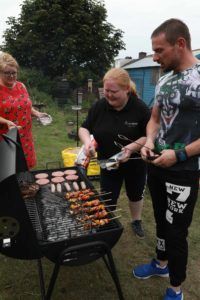 Back at the allotment, past and current residents gather daily to water the plants and tend to its needs. The air is filled with laughter and banter as Lee, a former resident and friendly ex-army veteran, cooks up a delicious smoking barbeque to the resident’s delight.
Father of three, Lee, left the army in 2009 when his life spiralled out of control. After many troubled years of abusing drink and drugs, the 31 year old became homeless. He said: “With the support of Calderwood House, I now have my own home and work as a Security Guard. I can support my daughters and now look forward to a bright future.”
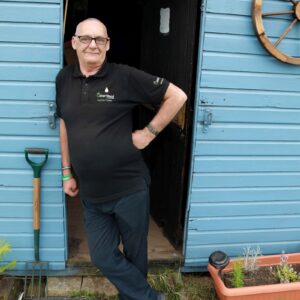 Also helping out is former veteran and resident Keith, who had been homeless on and off for many years. He had been living at the back of Tesco’s in Whitehaven when Rachel Holliday, Director and Founder of Time to Change approached him to offer help. Keith said: “If it wasn’t for Rachel, I would be dead.” Fast forward to today and you will find Keith helping current residents. He lives nearby and works as a Support Worker in the hostel. Forever thankful for the support he received, he now wants to pay it forward and help others.
Rachel was born and raised in Whitehaven. After becoming homeless in her teens, she spent many years working hard to move out of poverty and create a better life for herself.
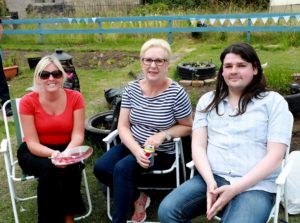 Rachel set up Time to Change (West Cumbria) in 2013 to tackle the rising issue of homelessness and subsequent unemployment in the area. Based in the former police station, Calderwood House has received more than £70,000 in grants from Cumbria Community Foundation since 2013.
The first grant gave Rachel the opportunity to create eight new jobs. She said: “Staff are trained to a high standard to ensure our residents have the best support available to them. Time to Change also offers employment to those who may have been homeless, an ex-offender, or have faced mental health issues or addiction. We recognise our employees with lived experience often go over and above for our residents. I have personally experienced homelessness, drug addiction and severe mental health illness. It makes me who I am. Seeing my recovery and hearing my story gives others hope that there is a bright future out there.”
Another grant supported the purchase of a mobile coffee van from which residents sell its own brand blended coffee. You will often see new member of staff, Deb and Keith with the van at local events fundraising for Calderwood House. The coffee is packaged in-house and sold to the consumer market. For the residents, the purchase of the van not only meant new training but also paid employment.
The world of the homeless is a tough place. More and more people are facing homelessness and housing problems. Calderwood House will continue to save lives and support people at their most vulnerable.
Addiction has no prejudice
“I liked to have a drink and would often have a glass of wine in the evening but then alcohol became my crutch. I found myself opening the wine and drinking the whole bottle.” This is a common statement in our current society and for some it can be the start of a downward spiral.
Alcohol-related hospital admissions in Cumbria are worse than the average for England. Cumbria Alcohol and Drug Advisory Service (CADAS) aims to address and reduce the negative impact of problematic drug and alcohol use on individuals, their families and communities.
 CADAS is at the forefront of tackling drug and alcohol addiction in the county. It is particularly serious in Barrow, which has seen a spike in drug related deaths. People here are more likely to die from drugs than those in Manchester, Liverpool or Lancaster.
Helen Davies, one of the charity’s three clinical supervisors, said alcohol continues to be the substance most affecting local people. But the charity’s staff and volunteers are seeing evidence that people are increasingly mixing their alcohol use with dabbling in cocaine, with potentially damaging long-term consequences. “More people are accessing our service because of cocaine, and there are a lot of people using it recreationally while they are having a night out in town,” said Helen.
Brian, 40, started drinking at the age of 14. He describes his addiction growing from alcohol to ecstasy to cocaine before ending up in jail, where he started using heroin. “When I came out I was stealing from people, I was constantly asking for money. I was manipulating people. I didn’t think I had a problem. I thought I didn’t need recovery and that I could do it my way.”
He stopped using drugs and alcohol and received help from The Well in Barrow and put on the 12-step programme. He had talking therapy with CADAS and ten sessions of black box therapy – a TENS machine stimulates the body’s production of natural endorphins. This helps reduce stress, anxiety, improve sleeping patterns and the body to heal.
Recently, Brian saw his mother for the first time in a while. She said that him walking away that day was the hardest thing she ever saw, because for the first time in her life she wanted him to stay, not leave.
 Over the last 17 years, CADAS has received almost £230,000 in grants from the Foundation. The first grant was awarded in 2003 towards staff supervision and training. In 2014, £30,000 from the NMP Community Fund helped to extend the S.T.A.R.S project in west Cumbria. Two part-time youth development workers were employed to support groups of 11-19 year olds through drug and alcohol school education programmes. It also offered one-to-one support for those worried about their own or others substance misuse.
CADAS uses volunteers to support people through their recovery and reintegration into the community. £24,000 from the United Utilities Legacy Fund employed a Volunteer Coordinator in West Cumbria. More recently, £30,000 was awarded to support the wages of a Recovery Volunteer Coordinator and increase the number of volunteers in Barrow over the next three years.
 Carrie Bertram, CADAS Centre Coordinator, said: “Once trained, our volunteers can change a lot of lives. The intensive fourteen-week training process gives volunteers the skills and understanding to help clients make positive changes in their lives. They see an average of two clients each a week, offering mediation, nutrition and lifestyle support and a signposting service.”
Phil Caine, a CADAS volunteer who became an employee and now coaches people in recovery, said: “Volunteering is part of my own recovery. I live the 12-step programme. I wanted to work with CADAS and use my knowledge of addiction and drugs. There is the behavioural side of addiction, that’s a lot of what we do here, helping people figure out what is underneath the addiction.”
Addiction has no prejudice. It doesn’t discriminate, no matter where you are from, how old you are or what job or school you go to. There is no getting away from the fact that addiction can happen to anyone of us.