

Category: Uncategorised
Showing care for those in despair
In one year alone, west Cumbrian charity, Allerdale Disability Association (ADA), unlocked more than four million pounds worth of benefits for people with disabilities.
 You can see the gratitude by the abundance of thank you cards displayed. Everywhere you look there is another gesture of thanks. ADA helps people during their most vulnerable and desperate times.
For most people it helps, it is a life changing service. But for others, the wait, the uncertainty, and the stress, is too much. ADA knows of people who have been driven to thoughts of suicide. Four men have taken their own lives waiting for their benefits appeals to be heard.
Last year, ADA, based in Moorclose Community Centre in Workington, helped 900 people through its information service.
Paul Parkinson, Information and Benefits Advisor, helps people navigate  their way through the benefits system. In the past, people were given awards for life under the Disability Living Allowance scheme. Now with Personal Independence Payments, people must apply every two years, even if their disability hasn’t changed.
He said: “People are living on money from family, friends, fresh air or they are getting into debt.
“Three of my clients have committed suicide in three years. I went to an appeal tribunal with the widow of a fourth. I try to help clients with everything from filling in forms to appeals and supporting families during the tribunal hearings in court. Just last week, £80,000 of benefits were claimed back for clients after being turned down.”
 According to a recent BBC report, a third of people do not appeal the DWP’s decision because ‘the process would be too stressful’ while one in five said they were too unwell to challenge it. The same report featured people selling their belongings to survive as waiting times are more than 12 months for a successful appeal.
Despite this grim picture, there is hope. One client, 58 year old Paul, saw his benefits halve under the new system. Thanks to ADA, his benefits were fully restored. He said: “It made a lot of difference; it was really helpful.”
While getting people’s benefits payments are a life-changing aspect of ADA’s work, it is the regular weekly support that changes the quality of life for its members.
Twice a week, the doors of the centre are thrown open and anyone with a  physical disability, their families and carers are welcome to come and spend time together. It’s a place where people can relax, learn new skills and meet new friends, or just as 43 year old John said: “I have only one leg and my dad cares for me and my mum who has rheumatoid arthritis. It is a place to go, there’s good conversation and a friendly atmosphere. It gets me out of the house two days a week and it gives my dad a bit of a break.”
In addition to the normal activities, the charity also organises trips to various places and in 2004, after hearing that the local Talking Newspaper group was to disband, the charity took it over and a team of volunteers have continued to record the weekly disc ever since.
 Tracey Parker is the manager of ADA. She co-ordinates all the activities and fills out more than 50 fundraising applications a year to keep the centre going.
Cumbria Community Foundation has given more than £138,000 to ADA since 2002. Tracey said: “It costs £68,000 a years to run the charity. The Foundation is a godsend. Its continued support has kept us open and has helped us unlock funding from other sources.”
Tracey has worked for the charity for 21 years. Its current chairman, Peter Mallyon, has been part of ADA for 25 years. Both are committed to providing a safe and supportive place for people living with disabilities.
 Their kind nature and welcoming spirit is evident in the way the members talk about them. David has been a regular attender for two decades. He has 24 hour care at home and said: “Tracey and Peter are like family to me.” The smile on David’s face says it all, this is a place where he feels safe and enjoys the company of his ‘extended family’.
ADA will continue to help west Cumbrian’s through the appeals process with the help from external funding. However the debt, frustration and stress ensued is causing people’s health to deteriorate and in some cases making their disability worse.
Mental health rehabilitation saving tax payers thousands
Helping only one person with their mental health recovery can save the community £60,000*.
A Cumbrian judge deferred a local man’s prison sentence after the intervention of Mind in West Cumbria. During sentencing, the Judge said: “I am delighted to read of your progress. I am delighted that you have responded to the help. There is no question that was it not for the support [of Mind in West Cumbria], I would have been imposing a custodial sentence.”
 Statutory mental health services are overstretched. Yet, Mind in West Cumbria has several initiatives to help people struggling with mental health issues. It currently offers one-to-one counselling, drop-in sessions and family support. People can also develop gardening skills at its allotment in Flimby. The charity can offer these services free of charge thanks to financial help and has received more than £88,000 from the Foundation since 2006.
One in four people are likely to suffer from diagnosable mental health problems. Mind in West Cumbria works with other agencies and local partners to support around 100 people per week.
 The Cumbria NHS Foundation Partnership has no dedicated helpline for people in urgent need of support. They must depend on GPs including the out of hours service and charities including MIND.
Dr Brian Campbell, Chairman, said: “We try to see people immediately, especially if there’s a threat of self-harm. We can give some time and activity that a GP doesn’t have time to do. We can go a long way to tackle mental health problems such as anxiety and depression, and, in some instances, self-harm and suicide.”
A young single mother, with no family of her own to turn to, was struggling with mental health. She is now a trainee manager and pursuing a university degree. She said: “I am only alive and beginning a life now because of MIND. Many people I have known never had the help and support I did, and sadly took their own life. MIND are paramount to people suffering like myself and so many others. They are the difference between life and death.”
 The first grant in 2008 developed the garden behind its building to make it more attractive to its users. From this the Feel Good Project was founded and further grants promoted physical fitness and emotional wellbeing.
Over the years, funding has also supported volunteer training and mentor schemes, drop in sessions and activity costs, such as photography.
The Open Mind project helps people to overcome barriers to employment. It was developed when a local young man, who was bullied for much of his school life, suffered from anxiety.
The project offers training in personal social skills and basic education, alongside other therapeutic support. It aims to increase employability – helping members to reach their potential and fulfil their aspirations.
Dr Brian Campbell continues: “We are delighted at the project’s success. It has supported 80 people and the fact it has now succeeded for this young man is the ‘icing on the cake’ for us. He’s joined the gym and a community group and is looking at starting at the local college.”
The Open Mind project also helped a 15 year old girl who dropped out of school and made a serious attempt to end her life. She was supported throughout this traumatic time and continued with her academic studies. She has now been offered an apprenticeship.
Mind in West Cumbria gives people a way forward. It helps them to understand their options, offers practical and emotional support and lets them know that they’re not alone. Brian concludes: “We help people rekindle their ambitions, which may seem limited due to illness, so that they can thrive as individuals.”
* the estimated cost of an adult custodial sentence to the community per year.
“I hadn’t learnt how to be a parent from my own Mum and needed some help with my baby.”
Imagine how frightening it is to be 18 years old and pregnant with no one to support you. Cumbria Family Support has been helping families break through the issues and challenges they face for 25 years.
A local 18 year old with a troubled childhood sought help when she was pregnant with her first baby. She worried about the future for herself and her child. Thanks to Cumbria Family Support, she now has 3 children who are flourishing.
 “I had no family support myself; I had always been the support for them. I hadn’t learnt how to be a parent from my own Mum and needed some help with my baby. At first, I was very nervous because I didn’t know what to expect. I worried about whether I would be able to look after my baby. I worried that others would think I wouldn’t be able to because of my childhood. I soon realised that the support worker was coming to help me and not judge me. She supports me to make the right decisions, she gives me advice that she would give to her own children. She never gets bored listening to me and has helped me with my anxiety and got me out of the house. She helps me with appointments and the children love it when she comes and like to play with her.”
Cumbria Family Support helps families who are experiencing difficulties in their own homes. Recently moving into the Allerdale area, the charity has been delivering services to families in Carlisle and Eden for 25 years with the support of over £63,000 of grants from Cumbria Community Foundation. Support workers and trained volunteers provide tailor-made practical and emotional support. Other services include parenting programmes, youth clubs and individual and group work sessions. The charity also manages the Child Contact Centre in Carlisle.
The first grant was awarded in 2006 and again in 2009 to train more volunteers to help with parenting, respite and offer a listening ear. In 2011, the ‘Best Buddies’ project received a grant to work with children aged 5-11 to promote positive relationships and develop awareness of personal safety.
In 2016, a grant helped towards the cost of a support worker to provide emotional resilience work. JP, aged 7, lives with her mum and an older teenage sister. Following her father’s sudden death, the school nurse referred her for emotional support. JP’s feelings started affecting her school and social life. The support worker helped JP to process her feelings about her father and his death. She became more confident, less withdrawn and more able to engage in all that school has to offer.
 Grants continue to support a more recent project called Empowering Children and Families. The project works with families to address emerging issues and prevent them from escalating. It aims to support 300 children through a team of 50 volunteers and support workers.
Pam Hutton, Chief Officer said: “We have had fantastic support from Cumbria Community Foundation. As for all charities, fundraising is an ongoing and challenging process. We are reliant on the good will of our fantastic volunteers and the grant making trusts that fund our work.”

The charity has more than 40 volunteers who befriend families, visiting them once a week. One volunteer said: “Some of the families have many professionals in and out of their lives. I am providing continuity to a family that has never had it before.”
Pam continues: “Volunteers are the heart of the organisation. They are recruited from the community and understand the local needs. Volunteers come from all walks of life. They could be a retired professional who has known us from their work or a young person wanting to gain experience in the care profession. Parents who have received our support have become volunteers because they know how our services helped them.”
Community park gives opportunities for all
Imagine achieving your dream of going to university and achieving a first class honours degree, only to then be unable to find a job.
This is not an isolated issue in Cumbria. However, thanks to a community park in Ulverston, social inclusion is at the heart of the learning and volunteering opportunities made available.
 Ford Park, an eight-acre community park in the heart of Ulverston, provides recreational facilities and a wide range of community based projects, activities and events. It’s a community initiative, with truly inclusive volunteering including those who feel socially isolated, have additional needs or are from vulnerable groups.
Matthew has volunteered at Ford Park since he finished university. He said: “I am profoundly deaf and communicate through British Sign Language. I’ve been unable to find paid work even though I have a first class honours degree. Ford Park makes me feel useful and wanted. The staff have given me lots of encouragement and given me more confidence with hearing people.”
 Ford Park Community Group provides inclusive volunteering opportunities, supporting a whole variety of people from across South Lakeland and the Furness Peninsula. More than £57,000 worth of grants have been awarded via Cumbria Community Foundation since 2006.
In 2017, Ford Park received £50,000 from the Fresh Ideas Fund to convert part of its walled kitchen garden so it could grow and sell herbaceous plants, heritage vegetable plants and winter potted bulbs. The funding also helped towards developing the Coach House Cafe’s small shop, which sold heritage and child friendly seeds and provides activity sheets to promote family friendly gardening.
The grant was also used to evaluate community views, experience and opinions of the Park to help diversify what it has to offer and attract more community involvement.
Some of the volunteers have health issues and additional needs and may have had a negative experience of formal education or employment.
 Jill Salmon, Chief Executive Officer, said: “For some of our volunteers there is limited support for them and having somewhere they can come and work two days a week is a huge part of their lives.
“Being involved in the project has helped to build their confidence and they feel welcomed as part of a group. Volunteers feel healthier physically and are more inclined to engage in further physical activity.”
One volunteer who suffered ill health said: “When I come through the gates of Ford Park I leave my anxiety behind. I have returned to work since my accident but volunteering helps me to maintain my mental health.”
The project has also helped increase employability, and some of the volunteers have gone on into paid employment.
Jill said: “The grant enabled the initial development, purchase of stock and training for volunteers and an apprentice. The nursery is now at a stage where plants are being propagated from our own stock for sale, volunteers are trained and competent, the apprentice is now in a long term paid position and visitors have come to know the nursery as part of Ford Park’s offer. The outlook is for a long-term, sustainable addition to the park that provides an income stream to the organisation and further opportunities for volunteers within the community.”
 Ford Park is a true community initiative, it was originally funded by the West Cumbria and Furness Key Fund. In 2006 it was awarded for £4,800 to employ a Project Development Manager to co-ordinate talks with stakeholders and potential partners in the development of the site. Later on in 2014 a grant was given to help towards equipment for its Wild Flower Meadow project to bring older and younger people to address disadvantage and stereotyping and get them out and about in nature. Ford Park continues its success in being the heart of a community.
Horses helping vulnerable people in Cumbria
Sometimes a horse is the only bridge between despair and hope.
The amazing bond between human and horse is helping those most in need to feel less anxious.
 Safety Net received £4,000 to run an innovative equine therapy project to help victims of sexual abuse and domestic violence work through issues around trust, self-belief and relationships and help rebuild their lives.
Working with the Calvert Trust in Keswick, the Equine Assisted Therapy was offered to 17 clients over 285 hourly sessions as an alternative to office-based therapy.
Lesley Storey, Chief Executive of Safety Net, said: “Clients who enjoyed the therapy reported feeling more positive about themselves and more valued because they’re no longer experiencing criticism or rejection for their behaviour. Where children and young people say that they lack friends, or are not liked, it often reflects their view that they’re not accepted or wanted by peers, which can be their perception rather than the reality of the situation. Equine therapy gives them the experience of developing real relationships and interactions with the horses, which can boost confidence in their ability to form bonds.
“We’ve also seen an improvement in self-esteem and confidence in relationships at home, at school, and, in many cases increased interest in leisure activities in their spare time.”
 One young client who engaged extremely well with the therapy worked with a little grey Welsh pony. Due to her previous life experiences, she was quiet and passive and found it very difficult to offer her thoughts, opinions, or even to feel that she had the right to say when she didn’t like something. She didn’t want to engage with any type of traditional office-based therapy because she was worried about speaking with people she didn’t know. That little grey pony played a significant part in her improvement, in all aspects of her life, and she was able to make real change. This was seen in her day to day life, enabling her to go on engaging with, and enjoying, a range of positive and healthy activities.
 Lesley continued: “We feel that the equine work played an important part in reducing post traumatic symptoms. Equine therapy can help our clients address difficult issues which they are reluctant to approach directly through counselling. We frequently see clients describing their own issues through their observations of the horse’s behaviours, or in the way that they interact with the horses. They gain therapeutically through this process, as they are able to make more sense of their experiences without becoming distressed by difficult memories or thoughts. The vast majority of clients, and their parents or carers, comment on how much they enjoy the sessions and the feeling of wellbeing they bring away with them.
Safety Net received its first grant, managed by the Foundation in 2005 and has received more than £183,000 in total. The Foundation has continued to support a variety of projects in Cumbria including a grant for £10,000 to provide outreach advice and guidance to relieve the trauma and distress of rape and sexual abuse in Wigton, Aspatria and Cockermouth. Other grants have funded early-intervention work at Whitehaven Academy, providing targeted teacher training, pupil peer mentoring, one-to-one therapy and support and drop in sessions by Safety Net’s specially trained therapists. A more recent grant was towards purchasing a new building in Workington to reduce waiting times, travel and offer more permanent support for people in West Cumbria.
New skills, new confidence, new business launched
A project designed to get people out of unemployment and back into work 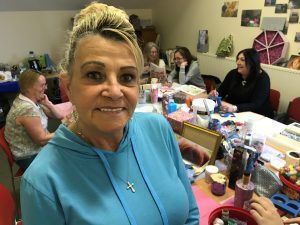 has led to one young woman launching her own business.
Thanks to almost £100,000 in grant funding, the Skills 4 You project in Cleator Moor has boosted confidence and given hundreds of people skills to make positive changes and get them back into employment.
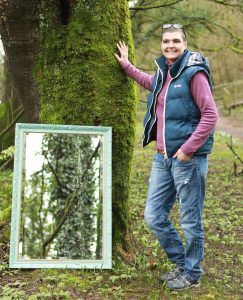 One such person is Lisa from Cleator. She lost her job and was feeling low. She found the Skills 4 You project, which teaches woodcraft and upcycling to help people who have a chronic lack of confidence, caused by mental or physical health challenges.
When Lisa joined the craft group, she was feeling anxious, having regular panic attacks and suffering from depression. But, determined to try lots of craft techniques, she quickly got the hang of decoupage and painting, so much so that in 2018, she started her own business upcycling and re-purposing old furniture and mirrors.
Lisa said: “The course was a major influence; it gave me the inspiration and 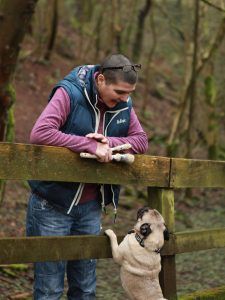 confidence to start my own business after a terrible time in my life”.
The future now looks bright for Lisa. She is enjoying her new adventure, learning new skills as she develops her business and selling her unique furniture through social media. She explained: “It’s a fantastic feeling to take a piece of furniture that nobody wants anymore and turn it into a centre piece that will be cherished by its new owner.”
Christina Timney, Grants and Information Officer at Home to Work, said: “We are so pleased that we were able to be part of Lisa’s journey through the rough times to where she is now.”
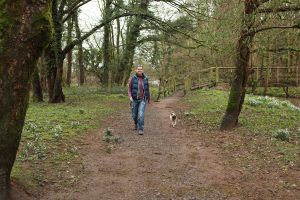 Lisa’s story is a familiar one, and although Lisa has an array of qualifications and many years of experience behind her, West Cumbria has high levels of unemployment, where a shocking one in four adults living in Copeland have no qualifications.
Trying to address this issue is the Skills 4 You project, run by social enterprise, Home to Work, by providing training opportunities to local residents. The project was launched in 2014 and has been supported by Cumbria Community Foundation for the last four years, to offer practical skills, mainly to 16 – 24 year olds, and a range of short courses to help people get on to mainstream accredited courses.
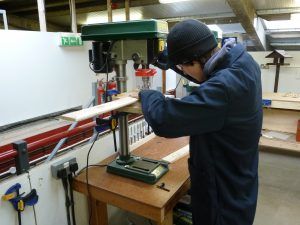 The eight-week training offers the opportunity to learn woodworking and crafting in an on-site workshop. Alongside the practical training, the course offers mentoring, support in writing a CV and how to perform in a job interview. It also looks at the social skills in life which can support mental health and wellbeing.
The activities on offer include restoring furniture, recycling salvaged timber to make garden furniture, planters or picnic tables, and creating simple wooden items like small toys, bird boxes, bird tables and sandpits.
The training course also helped Joe from Whitehaven. He left school at 16 with six GCSEs and had numerous jobs over the years. However, when he became unemployed, he started at Skills 4 You as by then, he had 4 children and wanted to be able to support his family.
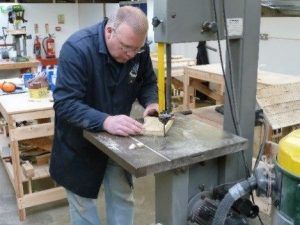 Joe competed the Skills 4 You programme and went on to work in grounds maintenance. He said: “The Skills 4 You programme gave me the confidence and motivation that I needed to tackle the labour market. I was approached by Home to Work to apply for an apprentice position working with the Whitehaven Lengthsman scheme. I was delighted to be offered the job, working towards an NVQ in amenity horticulture.”
Christina continues: “We are so proud of what our clients and the project has achieved. Our team has formed relationships with local people, many of whom lacked confidence, were in poor physical and mental health, and had no opportunity to learn new skills, as well as employers who advertise vacancies with us.”
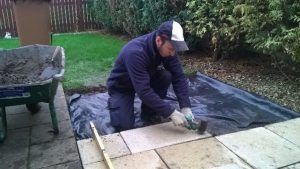 Home to work was first supported by the Foundation in 2007. £998 from the Sellafield Site Fund replaced old garden equipment for the Works 4 You project, developed to generate income by providing grounds maintenance services and employment to the local community. The garden scheme had been running for 6 years and the grant contributed to 2 lawnmowers and 2 strimmer’s to enable the charity to deliver garden services to the elderly and deprived communities of Cleator Moor, Frizington and Workington.
The great escape
Described by one member as “The Great Escape”, Caldbeck’s heart-warming community project “Men in Sheds” provides a perfect social haven for men to share their love of woodwork and a bit of a ‘craic’.
 Men in Sheds is exactly as it sounds, a shed known as the Old Joiners Workshop where men can seek friendship and pursue their practical interests. It’s a larger version of an ideal garden shed, located by the very beautiful, but secluded, Caldbeck Pond. It’s accessed by residents from the local area, often with the help of volunteers due to their age and isolation. Stepping inside you will discover a friendly, safe and inclusive environment where members share tools and resources to work on projects of their own choice at their own pace.
 One member Bert, who is 90, and would normally be very isolated and alone, said: “I live for Tuesdays and Thursdays.” The atmosphere is welcoming and warm as the sun shines through the dusty windows and the smell of bacon butties and warm wood fills the air. This is the place to be if you want to enjoy the companionship of likeminded and caring friends. An absolute need in this area for people like Bert, where issues including fuel poverty, and lack of facilities, services and transport affect them.
 The project meets twice a week and has more than 30 regular attendees. It not only provides respite for carers but a refuge for older men – some with early onset dementia. They also repair notice boards, vintage motorbikes and playgrounds. Their latest activity is making benches for Cumbria Wildlife Trust.
The vast number of projects, managed by Northern Fells Group, has received almost £200,000 in grants administered by Cumbria Community Foundation since 2004.
Libby Graham, Fundraising Coordinator, said: “The support offered by Cumbria Community Foundation and the grant aid we have received over the last 13 years, has been invaluable to the organisation and the communities of the seven parishes we serve. It has enabled the Northern Fells Group to pilot new initiatives, to expand our services and has provided the sustained continuity required to build and support our volunteer base, to ensure that our services are of the highest quality and to help us to continue to meet the changing needs of our users.”
 The Men is Sheds project continues to go from strength to strength. The Shed Master, Ken Graham and volunteers are self-admitted ’a bunch of big kids in old bodies.’ The members also support their local pub and meet every week with family members to have tea and a catch up.
Northern Fells Group is a community owned and volunteer led charity. Covering 200 square miles of upland terrain where 4,000 residents live, work and play who can also be vulnerable, isolated and excluded from vital services.
To respond to needs of the local community, the charity developed a range of services in addition to Men in Sheds, including a community minibus, a Village Agent service, a Lend a Hand scheme, benefits awareness advice and holiday play schemes, along with social and recreational activities.
 Over its time the group has helped many people. One gentleman has lived in the village since he retired from farming. Over the last few years, he suffered from high levels of anxiety, which meant that phone calls and any letters or bills caused a great problem. Small things easily overwhelmed him and he lost confidence in himself. The group provided social activities for him to attend on a regular basis such as Men in Sheds, where he was a regular for many years until going into a care home. He also attended lunch groups and other social activities run by the NFG. The Village Agent assisted him with ordering household aids and with sorting and filing bills and contacting utility providers. He used the minibus regularly when he gave up driving. He also used the Lend a Hand service to fit bathroom aids for safety.
Libby continues: “Residents face day-to-day issues like poor or no public transport, poor health and loneliness, and low incomes stretched by rising fuel prices. New people to the area and long term residents often don’t have family support networks.
“The grants mean that our services can continue to provide a lifeline for older, disabled and vulnerable people and are greatly valued by the wider community.”
In safe hands
A group of women whose lives have been transformed by learning the art of manicures and pedicures are now lifting other women out of despair.
 They’ve all successfully completed a course to become nail technicians in a purpose-built salon at the Gateway 4 Women centre in Carlisle and are now mentoring the next intake of students.
Gateway 4 Women is a subsidiary of Cumbria Gateway, which was set up in 2011 to address issues around homelessness, substance misuse, mental illness and domestic abuse. It offers accommodation, structured programmes, drop-in breakfast clubs, skills training and work experience opportunities plus practical and emotional support to help vulnerable people recover and develop a positive healthy future in the community.
Cumbria Gateway received its first grant of £2,500 in 2011 to help towards equipment and furnishings of 4 flats. Since then, it has received more than £107,000 in grants. Grants have helped towards a breakfast club for homeless people. The breakfast club’s aim, with the help of peer mentors, is to reach out and inspire those that might be considering a new way of life. It has on average 26 regular attendees. Other projects supported included a handy person scheme and a peer led support service to support vulnerable people across the area to access much needed help and support.
In 2017 it opened a new women’s only centre, Gateway 4 Women, to provide vital services that were not already available in north Cumbria, and has received more than £52,000 in grants. Based in Denton Holme, the centre is an educational and therapeutic one-stop shop for vulnerable women in Cumbria. It supports women who have been the victim of domestic violence, or who are undergoing drug and alcohol rehabilitation programmes, those suffering with mental health issues and other vulnerable groups.

The beauty salon is open to the public and the accredited Nail Technician Course runs from there. Last year, the funding enabled 12 women to study the nine-month course and has given them the confidence to rebuild their lives. Some have gone on to use their qualification and skills to set up their own business or to work within the centre’s in-house salon.
 Nicole started at Gateway 4 Women as a client accessing the support, she said: “After building up my confidence and self-esteem by participating in the course, I started to volunteer at the centre. That led me to become a full-time member of staff, helping to run the salon and mentoring clients.”
Denise attended the course and now volunteers in the salon at the centre, she said: “This was a new start for me, learning something new. It has given me back my confidence and a chance to make new friends and a new qualification. To then go on and be able to volunteer at the salon has been amazing. Here I can gain experience in a salon environment and also make my clients feel better about themselves.”
Angela participated on the course last year, as a mentor. She said: “Personally, I really enjoyed it and it has helped my confidence in my supporting abilities. I have enjoyed working with the ladies on the course and helping them to achieve their goals.”
Emma, who also completed the course in 2018, said: “This was an opportunity to work in a safe environment and I thoroughly enjoyed learning about nails, hands and feet. It has also helped me massively with my confidence and self-esteem and to make new friends.”
 The course started in January and is fully subscribed. Another 12 women will have the opportunity to learn new skills and build their confidence while working with previous students who now volunteer as mentors.
The centre wouldn’t survive without grant funding and motivated volunteers who get together and make things happen.
Women and girls projects share in £3.4 million of national funding.
Almost 500 of Cumbria’s most vulnerable women and girls will benefit from charitable funding through projects focusing on those at risk of crisis.
Three community groups have received grants of between £5,000 – £10,000 from the Tampon Tax Community Fund, administered by Cumbria Community Foundation, to work with women of all ages, focussing on preventative services.
Charities to receive funding include Springfield Domestic Abuse Support in Kendal, Gateway 4 Women in Carlisle and Women’s Community Matters in Barrow.
Springfield Domestic Abuse Support will carry out one to one support and counselling to help 100 women build their skills and confidence and improve health and wellbeing. The grant will allow the charity to improve current support on offer, providing more appointments and reducing the waiting list. Women have sometimes had to wait up to 3 weeks for an initial meeting, with another member of staff available women will been seen within a week.
Angela Speak, Project Lead Community Support Service/Deputy Springfield Service Manager, said: “Demand for our support has more than doubled in the past year and we will be using the funding to provide an additional staff member on a part time contract for 12 months. This will make a huge difference to our service and reduce the current pressure on our service and waiting times for appointments.”
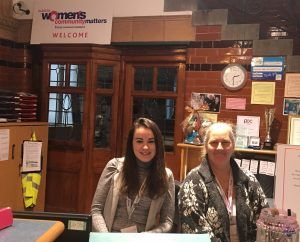 Women’s Community Matters will employ two part-time Project Assistants who will work alongside the Project Manager and other staff to support the delivery of a range of additional activities for young women to build their skills, confidence and improve health and wellbeing.
Many women travel to the centre in Barrow from Ulverston, Millom, Askam and Grange and this project will support around 300 different women over a 6 month period, helping to improve their own mental health and wellbeing by accessing a range of opportunities for social connection and learning.
A delighted Rebecca Rawlings, Senior Officer at Women’s Community Matters, said: “We are really grateful for this opportunity to support women with their mental health and wellbeing. We have developed the idea alongside women who access the centre and we are all looking forward to developing more opportunities for women and girls in the community.”
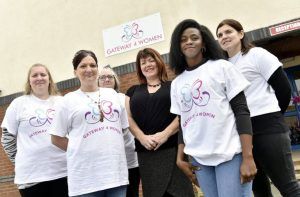 Gateway 4 Women will use the money to run the Pause for Thought project, which will build the confidence and self-worth of young women through activities and discussions. It will provide opportunity to connect with other young women who have similar experiences as a process to recovery, sharing their stories as part of the group process.
Jennifer Campbell, Chief Executive, said: “Building on the popularity and success of our existing course programme: ‘Beautiful Woman, Beautiful Me’, we will be introducing a similar personal development course ‘Pause for Thought’ tailored for young women aged 14-19.”
Ellen Clements, Senior Grants and Donor Services Officer at Cumbria Community Foundation, said: “We are aware that there is a high number of women who face multiple disadvantages in Cumbria. I welcome the chance to use the Tampon Tax proceeds to help change the lives of these women. The grants will make a big difference to the projects funded, enabling women in Cumbria to build their confidence and self-worth.”
VACANCY – 20th Anniversary Events and Fundraising Coordinator
20th Anniversary Events and Fundraising Coordinator (fixed-term position until February 2020)
(25 – 30 hours per week negotiable) per week across 5 days
£20-21K full-time equivalent, depending on experience
2019 is the 20th anniversary of the Foundation. We have titled the year: ‘Giving Back, Looking Forward’. It will be a year in which we aim to widen people’s involvement in the Community Foundation, by communicating the impact and positive change achieved through our grant making, having distributed £42m since 1999.
As part of our year-long campaign, we are encouraging people and businesses to get involved and take part in their own challenge or host an event to help raise money for the Cumbria Fund.
We are seeking a confident, enthusiastic and driven individual who has a passion for Cumbria and will act as the central point of contact with event hosts to ensure top quality support and follow-ups.
For an informal discussion about the role, please contact Annalee Holliday or Anne Meeghan on 01900 825760
The post is based at our offices in Dovenby near Cockermouth.
If you want to work with a highly respected organisation in a challenging but interesting role then download the job description and application form.
Closing date for applications is midnight Sunday 3rd February 2019.
Interviews commence week beginning 11th February 2019.