

Author: Cumbria Community Foundation
The hidden heroes
In West Cumbria, there are currently around 1,700 young carers. Take Cara for example, she is 14 years old and devotedly cares for her mother who has a physical disability and uses a wheelchair. Without Cara’s devotion and motivation, there would be no one to do practical jobs around the home including washing, cleaning and food shopping.
 Being a young carer can leave you feeling isolated and excluded. West Cumbria Carers supports young carers like Cara. It offers one to one support for those who are particularly in crisis or at high risk and those whose education has been impacted by their caring role. A big part of its role is providing respite for the young carers. Cara loves the trips and activities, particularly the summer sports activities and dry slope skiing.
West Cumbria Carers operates across Allerdale and Copeland and provides support to 1,900 adult carers and 300 young carers, some as young as five. Since 2006, the charity has received more than £256,000 to support carers in West Cumbria.
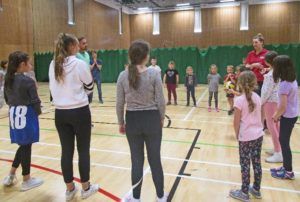 Grants have supported outreach work, one to one sessions, summer respite activities and targeted small group activities, which included a group of young carers who have siblings with an illness or disability.
The one to one sessions really helped Cara when she was feeling stressed. She could talk to a support worker and they worked together to help her develop strategies to improve her emotional resilience and help her deal with stress.
Another young person who has benefited from one to one support is 11 year old Jessica. She is a young carer for her mother who has a mental health condition. Jessica doesn’t know if her mum will be at home or not when she returns from school. Her mum tries to shield her as much as possible but she knows that Jessica still worries about her. Jessica also worries about her own mental health and whether she will develop the same illness as her mum.
When Jessica first joined the young carer’s project, she was very shy and didn’t like to mix with the other children. Two years later, she is a regular at the groups and trips and has made lots of new friends. Jessica said: “It’s nice to be able to talk to other children who understand what it’s like to be a young carer.”
 There are around 17,000 carers in West Cumbria with over 3,000 providing more than 50 hours a week of care. While people who are cared for qualify for a variety of benefits, carers themselves usually are only able to claim carers’ allowance, which means they are usually on a low income. Many carers also have their own health problems due to the physical demands of the care they undertake.
Support to adult carers includes driving carers to health appointments, providing volunteers to sit with people so carers can go out, and helping them access information, advice and services. The charity also provides training to local businesses to help them manage working carers in their workforce.
Andrea Carlton, a senior support worker, said: “Social isolation both for the carer and the cared for person is huge. We try to get people to come to us before their situation reaches crisis point. There’s a lot of people aged between 45-65 who are at the peak of their careers that are also in a caring role.”
Angela Longrigg, volunteer and projects coordinator, added: “We also have many ‘sandwich carers’ who have young children and are also caring for a parent. They have no time for themselves and tend to put their own health at the bottom of the list.”
 Grants from Cumbria Community Foundation have supported several projects including supporting carers over the winter months and establishing Lasting Power of Attorney’s for clients. Grants have also enabled staff at the Carers Clinic, based at West Cumberland Hospital in Whitehaven, to continue to provide emotional and practical support to carers of those who have been admitted to hospital.
Supporting the young people of Cumbria
Based in Workington, Cumbria Youth Alliance (CYA) was set up in 1997 and has received over £300,000 from Cumbria Community Foundation since 2003. Each year, it works with around 2,000 young people around the county, focussing on the most deprived areas, to help them reach their full potential.
 One such project is the Friday Night Project. Originally set up by Inspira, CYA started delivering the project in 2017 when Inspira pulled out. Running in collaboration with other youth organisations in Allerdale, it has had an appreciable impact on anti-social behaviour rates across the borough. Each organisation offers different youth-led activities in venues on a Friday night. Young people aged between 11 and 19 come together to enjoy a wide range of activities such as team games, quiz nights, craft sessions and cookery workshops.
The number of young people at risk of being NEET (not in education, employment, or training) is higher than the national average in West Cumbria. The ‘First Steps to Employment’ project offers one-to-one support for young people in West Cumbria to address issues and barriers to engagement in education, training and work. Each young person develops their own action plan to identify the ‘steps’ needed to reach their employment goals and identify and achieve their aspirations.
 Cath Clarke, Chief Officer of Cumbria Youth Alliance, said: “All young people have potential, but those born into disadvantage face an uphill struggle from the start. Many fail at school and later, are unable to find or keep jobs and end up in a spiral of long term unemployment and benefit dependency.
“Access to positive activities really assists with ensuring young people make a successful transition into adulthood. They become more engaged and we notice marked improvements in their behaviour. Many young people started on the programme as beneficiaries and have now moved into volunteering positions, helping more young people to benefit in the communities.”
CYA has delivered many different projects over the years. One such project, ‘Get Up; Set Up’ was supported by the #iwill Fund, which encourages youth social action, and gave groups of young Cumbrian’s the chance to take an active role in their communities. Some of the projects that have been developed include: painting and decorating a local community centre, visiting elderly residents in a local care home, and developing the community garden at Florence Mine.
The ‘Every Young Voice Counts’ project received funding to engage young people in the democratic processes and structures. It was designed to generate interest in how local decisions are made and how young people can influence these decisions. A series of democracy workshops were delivered to more than 350 Cumbrian youngsters in schools and youth clubs.
Another grant supported a mental health and emotional resilience project, called ‘With the Future in Mind.’ The project trained a network of young people in secondary schools and colleges across West Cumbria as peer leads around the emotional resilience agenda. Pupils became Mental Health First Aid champions and will support their fellow peers in years to come. This is the ultimate legacy; with young people having a greater understanding of what constitutes good mental health and emotional resilience.
Young people face many challenges as they move into adulthood, but for the 2,000 youngsters who benefit each year from CYA’s support, they become better equipped as they go on in life and learn some of the skills needed to improve their life chances and aspirations.
Keeping the community together; ‘I have waited 26 years for a club like this’
A warm welcome and a room full of laughter is what awaits you at Mirehouse Residents Group in Whitehaven.
Formed in 2008, the committee of seven encourage local residents and agencies to implement projects and events that get generations working together to improve their quality of life and reduce social isolation.
 Activities run out of the Mirehouse Community Centre on Seathwaite Avenue, and with the assistance of grants from Cumbria Community Foundation, armchair aerobics, lunch club, arts and crafts and bingo have all been organised; making a great social setting for a good old craic.
Word quickly spread and members flocked in. The group started to plan for future activities and soon became a lifeline to many that may otherwise have become isolated from the community.
Since 2010, Mirehouse Residents Group has received £69,284 from the Foundation. The first grant enabled the local neighbourhood warden to relocate to the community centre and help address fears of crime in the community. Mirehouse is one of the most deprived wards in England and fear of crime is the biggest problem for its residents.
Grants have supported the running costs of the group and also the costs of community workshops such as poetry and song writing during National Poetry Week. This encouraged local people of all ages to take up creative writing.
Keith Cartner, Community Coordinator, said: “The project encouraged intergenerational activity, as well as improving basic skills in literacy and giving the residents the courage to put their work forward. It was the first time something of this nature had been tried in the heart of the community, and gave residents a first chance to engage in cultural performance and activity.
 Jenny Doran who was born in 1927 loves writing poetry. In 1950 Jenny and her husband Billy got their first council house when Mirehouse was a small estate surrounded by fields. Jenny has been a regular at many of the group’s activities and is renowned for her poetry and also helps and encourages others to have a go themselves. This led to the production of Mirehouse Memories, which shared the collected stories of long-standing residents and their memories of life growing up on Mirehouse.
Jenny said: “Without the camaraderie created through Cumbria Community Foundation’s support, this could never have been imagined. Here is a poem from Jenny’s collection about her memories of one of Mirehouse’s community club’s:
The Calder Club was the place to go
The people of Mirehouse loved it so
Groups came from far and wide
Artists, singers, comedians, you were lucky to get inside.
People booked it for weddings, christening parties too
And some for funeral parties, which sadly wasn’t a ‘do’.
There was a lovely lounge, where people gathered for drinks and chat,
Men played cards and dominoes, while the women talked and sat.
There was badminton and bingo, a quiet snug to sit and browse,
To sit in peace and quiet, away from all the crowds
At Christmas there were parties, one for children too,
New Year’s Eve was a great night out, we were often there till two.
It was the best club in Cumbria and sadly now it’s gone,
But we will never forget the Calder Club,
For in our memories
It lives on.
Today you will find Edith Dickinson, a regular to Mirehouse Residents Group, sharing memories and tales of the past. She really does fill the room with laughter with her stories. Born in 1932, Edith has been a resident of Mirehouse for most of her life. She reminisces and remembers how ecstatic she was to move to the estate. Edith said: “The neighbours were all lovely. A lot of the people on the street have lived here as long as me, or longer. We talked to everybody; we knew everybody and talked over the fences. I have waited 26 years for a club like this!”
 Grants have been used to introduce young people to new opportunities and increase their aspirations by engaging them in positive activities. Young people regularly attend its weekly youth group and take part in activities such as arts and crafts, cookery and sports sessions, and drug and alcohol awareness. The Food for Thought Project, proved very successful bringing together residents in a series of activities to help them to make better life choices, including healthy eating.
Alongside Food for Thought, the Fit for Life project has been getting families together for sessions incorporating health, exercise, cookery and other skills to help them towards a healthier lifestyle and increased confidence and self-esteem.
 Another project keeping the community together is The Mirehouse Young Voices, which encouraged members of the youth group to work alongside the adults. The aim was to establish a youth voice and start challenging the poor opinions that the older generation often have of young people. It looked at how youngsters could develop their local environment by highlighting areas of concern or improvement from a young person’s perspective.
The area around Mirehouse cattle arch, used daily by school children and the community, had been littered with drug paraphernalia and attacked by vandals, and was ‘intimidating’ to older people. The youth group worked with The Colourful North to paint the walls of the arch, which has now become a much safer area to walk through as parents drop their children off and collect at school.
Mirehouse Residents Group continues to grow, and this group proves its residents are proud to live there and work as a community for the good of the neighbourhood.
Development Assistant
Would you like to be part of our team here at our offices in Dovenby near Cockermouth?
We address disadvantage in Cumbria by making grants to charitable groups and individuals on behalf of our fundholders and supporters.
The role of Development Assistant underpins the work of the Development team, undertaking research, managing data, providing information and practical support to staff and trustees. The role also includes event organisation, significant project work and lead responsibility for relations with professional advisers.
For further information please download the job description.
For an informal discussion about the role, please contact Andy Beeforth on 01900 825760.
To apply please complete the application form, and submit by the closing date, midnight 6 October. Interviews commence week beginning 14 October.
Half a million windfall thanks to offshore wind farm
Communities along the coast of Allerdale have shared more than half a million pound thanks to an energy firm’s investment over the last ten years.
The Robin Rigg West Cumbria Fund was set up when the Robin Rigg offshore wind farm was built by energy company, E.ON, just off the coast of Workington. Managed by Cumbria Community Foundation since 2009, the fund has provided grants of up to £15,000 to community projects along the Allerdale coast that promote sustainable use of energy and resources, reduce climate change, and support nature conservation.
Cumbria Biodiversity Data Centre (CBDC) received £10,000 to recruit local volunteers to map, identify and record the habitats and species along the Solway plain.
Deborah Muscat, Manager at CBDC, said: “Much is known about the birds and Natterjack toads in the area but there is less information about the whereabouts of other plants and animals. Thanks to the funding, the Solway Nature Network was set up in 2018 to discover more about the natural history of the Solway.
 “We recruited 24 volunteers and through a series of guided walks and training sessions, they developed their wildlife identification skills and started to record what they saw – over 1,000 records have been submitted, covering over 580 different species. Over half of the records are plant species, but we also know of other wildlife including birds, beetles, butterflies and fungi, some of which are nationally rare or protected.
“We have also been able to support the volunteers to take part in other activities such as Cumbria Wildlife Trust’s Get Cumbria Buzzing project, the National Plant Monitoring Scheme and CBDC’s recording days. The more practice the volunteers have, the better they become and the more likely we will continue to receive information from them.”
Maryport Inshore Rescue received two grants totalling £19,838. Mike Messenger, Operations Manager, said: “In 2013, we installed an environmentally-friendly rainwater harvesting system and the first set of solar panels on the east side of the building. We were supported once again earlier this year to install additional solar panels on the west side of the building. This has reduced our carbon footprint and has reduced our energy bill significantly, which is fantastic as funds saved go towards the running costs of the charity.
 “We would like to thank the E.ON and all at Cumbria Community Foundation for their help and support, not only from this fund but from all the other successful funding applications we have submitted over the last decade. Our organisation would not be half as good as it is now without the support of the Cumbria Community Foundation.”
In Workington, Northside Community Centre received £23,790 from the Robin Rigg Fund for the installation of solar panels and the replacement of internal light fittings.
Stella Kent, Centre Manager said: “Thanks to funding, we have been able to reduce the cost of our energy bills, which is great news in this current climate of ever rising energy bills. The installation of solar panels on the roof means we have benefited from using renewable energy and also receive an income from the feed-in tariff payments received for any excess electricity generated, which is exported to the local grid.”
Emma Skelton, Business Service Co-ordinator at E.ON, said: “The Robin Rigg West Community Fund has delivered some fantastic projects which have promoted the sustainable use of energy and resources, supported nature conservation and addressed other environmental needs of the communities local to Robin Rigg. I’m truly delighted with what has been achieved over the last decade and I would like to thank Cumbria Community Foundation for the big part they have played in making these projects a reality and a success.”
48 community organisations benefited from the fund, totalling more than £546,000. Annalee Holliday, Grants & Donor Services Officer at Cumbria Community Foundation, said: “The fund provided a valuable, long-term, sustainable and reliable source of income for the local communities that neighbour the wind farm. Promoting sustainable living is so important these days, and funds set up by local businesses such as E.ON have been crucial in helping projects make a bigger impact in their area.
“The legacy of the Robin Rigg West Cumbria Fund will last for many years to come.”
Cricket club boosted by funding
Members of Tallentire Cricket Club are celebrating after receiving a grant for £1,858 from the Tallentire Wind Farm Community Benefit Fund.
Managed by Cumbria Community Foundation, the Tallentire Wind Farm Community Benefit Fund provides grants to support community, educational or environmental activities.
Stephen Moore said: “The members of Tallentire Cricket Club are pleased and grateful to have received a grant from the Tallentire Wind Farm Fund through Cumbria Community Foundation.
“This will be used to buy new equipment over the winter so that we shall be ready to go at the start of next season. Our club plays friendly matches against other villages and teams of similar standard on weekday evenings throughout the spring and summer. It is becoming harder to find sufficient opponents to provide a full fixture list for the season so if there are any other similar teams looking for a game, we should be glad to hear from them. We are doing our best to keep village cricket alive in this area.”

The six turbines at Tallentire Wind Farm began operating in summer 2013. RES established a community benefit fund with an initial £175,000 and around £30,000 annually for the lifetime of the wind farm. More than £300,000 has already been awarded to the communities neighbouring the Tallentire Wind Farm: Bridekirk, Blindcrake, Gilcrux and Plumbland.
Gary Higgs, Grant Officer at Cumbria Community Foundation said: “The fund provides a valuable, long term, sustainable and reliable source of income for the local communities that neighbour Tallentire Wind Farm. It is flexible funding that can address what is really important to communities and we’re delighted to administer this funding which has been making a difference to the communities surrounding the Wind Farm.”
Cumbria Community Foundation was appointed by RES to manage the community fund. The Foundation works with communities to help them decide how funds should be allocated. Using its grant making expertise, the Foundation supports the community awarding grants that deliver a lasting impact.
Applications for funding must be received by Friday 6th December 2019 for a decision on 8th January 2020. For more information on the Tallentire Wind Farm Community Benefit Fund or to apply online, please visit www.cumbriafoundation.org or email gary@cumbriafoundation.org.
Over £89,000 awarded to help make a difference to Cumbrian communities
Community projects across the county have received a share of £89,000 to tackle issues around mental health, rural isolation, financial wellbeing and to improve access to sport and recreation.
26 charitable organisations received a share of the £77,144 at Cumbria Community Foundation’s recent grants panel. The money came from 24 grant making funds, administered by the Community Foundation, including those set up by the Cumberland and Westmorland Herald, the William Milburn Charitable Trust and Westmorland Family Community Fund.
18 people also received a share of 12,616 to help towards educational and vocational training fees.
The Lighthouse Community Mental Health Hub located at the rear of Stricklandgate House in Kendal can now provide a year of mental health support thanks to £3,500 from the Brian & Ann Clark Fund and Johnson Fund. The drop-in sessions are open to anyone wishing to maintain or improve their emotional or mental health.
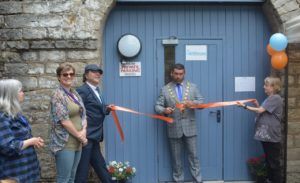 Madeleine Iddon, Chair of Trustees said: “We provide a safe space for those in South Lakeland who may be struggling with their mental health or emotional wellbeing to drop-in, have a brew and a chat with trained peer support volunteers. This grant enables us to have stability in the lease of our hub, which acts as a home from home for many of our members.”
Penrith Cricket Sports and Social Club has 20 years of delivering high quality coaching. It was awarded £1,500 from the Rowan Fund and the Cumberland and Westmorland Herald Fund to support its volunteer expenses. This will increase the number of coaches and help deliver more sessions during both the winter and summer, and introduce female and disability sessions.
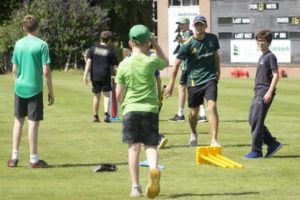 Andy Hall, Chairman, said: “We currently run nine teams and have plans to significantly increase the number of junior and senior teams, with women’s, girls and disability cricket being at the heart of the planned development over the next three years.
 “To be able to maintain and significantly develop participation, we rely on volunteers giving their time to coach our players. The support of Cumbria Community Foundation is absolutely crucial to enabling us to develop and go a long way towards securing our long-term sustainability at the very heart of our local community.”
Other grants awarded include £5,500 to Kendal Gymnastics Club from the Castle Green Grassroots Fund, Cumbria Young People’s Grassroots Fund and the Fryer Grassroots Fund. The grant will help the club to relocate and expand into new premises. The club is extremely popular in the local region and more gymnasts wish to join than there is space available. The club wishes to set up a leadership academy for teenagers and adults to train to become a coach or judge.
Carlisle Society for the Blind received £5,000 from Abbeyfield Carlisle Society Over 55 Community First Fund and Janetta Topsy Laidlaw Trust Fund. The grant will support its regular, monthly home visiting service to 80 members with different levels of visual impairment and sight loss across the Carlisle district. This support to predominantly elderly people includes, general advice, demonstration of household adaptations, help in reading mail and writing letters.
Ellen Clements, Senior Grants & Donor Services Officer at Cumbria Community Foundation, said: “Thanks to the generosity of our fundholders we are able to support many worthy community organisations around the county. These organisations are vital for tackling issues affecting our communities.”
The closing date for Cumbria Community Foundation’s next main grants panel is 27th September 2019. For more information, visit www.cumbriafoundation.org or call a member of the grants team on 01900 825760.
The Cumberland launches new charitable funding programme in conjunction with Cumbria Community Foundation
Cumbrian charities and community groups are being invited to bid for a share of £171,000 which is being made available to good causes by The Cumberland.
The building society has teamed up with Cumbria Community Foundation to set up a special fund to distribute the money.
The Cumberland has also increased the amount it gives to good causes annually to 1.5 per cent of its profits, which this year equates to £171,000.
Chief Executive Des Moore says the increase and decision to work with the Foundation illustrated The Cumberland’s desire to help the communities where it operates.
“We’re keen to make even more of a difference in our communities and working with Cumbria Community Foundation in this way means we will be able to make larger, strategic contributions to projects that have a longer-lasting impact.
 “Our purpose is to make a difference to people’s lives and that applies not just to the services we offer, but the part we play in the community. Our support for the Active Cumbria’s Cumbria School Games was a great example of the projects we supported last year and clearly made a massive difference to all the children involved.” he said.
“As well as the financial contributions we can make to help projects, we are also keen to offer practical help. Many of our people get involved and volunteer their time and we hope they can work with charities to offer a brighter, more positive future to those people in our communities who are in real need.” he added.
The Cumberland’s branch managers are being tasked with identifying good causes in their catchment areas who will get a share of £25,000 from the funds and with £13,000 already donated this financial year there will be £133,000 in the Foundation-administered fund.
The panel will be awarding strategic grants of up to £25,000 to improve or maintain the capacity of organisations promoting the health and wellbeing of people.
There will also be a range of smaller community grants of up to £5,000. These will be aimed at improving the life skills, education, employability and enterprise of disadvantaged people or supporting vulnerable, older people.
Annalee Holliday, grants and donor services officer for the Cumbria Community Foundation, said: “We have supported Cumberland Building Society with its charitable giving since 2011.
“We are delighted to continue this relationship on a much larger scale, making a greater impact. The business is committed to being a good neighbour, supporting the communities in which it operates and helping them reach their full potential. This funding will help local charitable projects do what they do best – tackle the disadvantage that they see on their doorstep.”
- Anyone interested in applying for funding needs to do so by September 27th ahead of the fund’s first panel meeting on October 29th. For more information visit :http://bit.ly/CumberlandCCF or contact Annalee Holliday via annalee@cumbriafoundation.org
Image :
Active Cumbria’s Cumbria School Games, supported by The Cumberland, were held earlier this year with over 1,500 children from around the county taking part.
About The Cumberland :
Based in Carlisle, The Cumberland is the UK’s 10th largest building society, serving 160,000 customers throughout Cumbria, South West Scotland, North Lancashire and Northumberland via its digital channels, local call centre and network of 34 branches.
Founded in 1850 and with assets now exceeding £2.5 billion, The Cumberland offers award-winning mortgages for residential and commercial borrowers, and banking services for both personal and business use. The Group also includes a leading estate agency, a vehicle finance subsidiary and an independent financial advice service.
For further information contact :
Phillip Ward (Brand & PR Manager)
Cumberland Building Society, Cumberland House, Cooper Way, Parkhouse, Carlisle, CA3 0JF
Telephone: 01228 403118
Email: phillip.ward@cumberland.co.uk
Giving hope to the homeless
Behind a row of terraced houses on the outskirts of Egremont lies a sanctuary. An allotment run by Calderwood House, a homeless hostel providing up to six months respite for those in need.
 Historically in West Cumbria there has been little or no provision for homeless adults who do not fall into the ‘priority’ category in the local authority. This often means a life of sofa surfing, living in unsafe conditions, being subject to exploitation and living rough on the streets. Without a fixed address they cannot get work or access to training so are unable to start rebuilding their lives.
Since opening in 2015, Time to Change (West Cumbria), which runs the hostel, has helped more than 170 people get back on their feet. For many who are supported by the social enterprise, this is a place to relax, learn new skills and be with new friends.
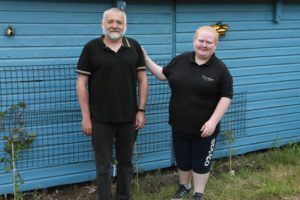 In 2018, a £7,000 grant helped set up the allotment project. Under the supervision of support worker Carla, residents grow vegetables that are then used in the kitchen. Working as a team, it provides a support network to deal with issues such as isolation, depression and low self-esteem.
This little oasis of peace offers a place to go when residents need some time to reflect and gather their thoughts. In the allotment, not only will you find fruit, vegetables and flowers, a cherry tree flourishes in the corner. It was recently planted for a resident who lost his life – a tragic story that will never leave the devoted team. Their energy, motivation and commitment to help people is commendable.
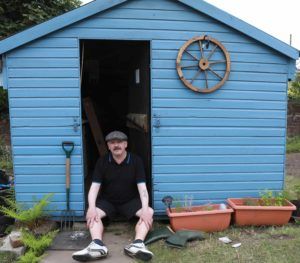
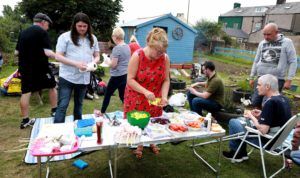 Sat in the shade of the potting shed is a former resident who now volunteers at the hostel. He became homeless after a sudden stroke had took away his ability to communicate while on holiday. After months in hospital recuperating, he returned to Cumbria to find he had lost his job and his home.
Billy, 26, became homeless when his family circumstances changed after a tragic incident. Not only was he subjected to a savage attack, he had also been living without gas and electricity for a year. He said: “It wasn’t safe for me to stay at home, I had nowhere to go.” Billy spent months at Calderwood House recovering. Since moving out, he now has a house nearby. He still enjoys visiting the Calderwood House team most days. They continue to support him, including helping him to apply for an online university course.
At Calderwood House, residents learn to live together in a community, sharing the cooking and cleaning, as well as developing skills and knowledge through work experience and training. You will often find residents helping in the community, including street cleaning and litter picking. One of the conditions of their stay is they stay free from drugs and alcohol, and testing is carried out.
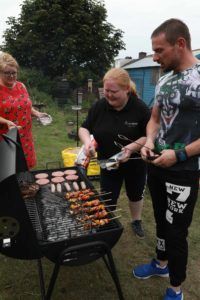 Back at the allotment, past and current residents gather daily to water the plants and tend to its needs. The air is filled with laughter and banter as Lee, a former resident and friendly ex-army veteran, cooks up a delicious smoking barbeque to the resident’s delight.
Father of three, Lee, left the army in 2009 when his life spiralled out of control. After many troubled years of abusing drink and drugs, the 31 year old became homeless. He said: “With the support of Calderwood House, I now have my own home and work as a Security Guard. I can support my daughters and now look forward to a bright future.”
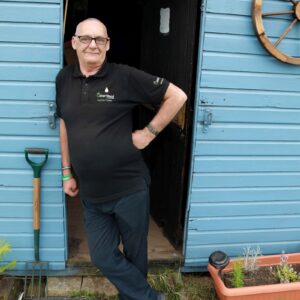 Also helping out is former veteran and resident Keith, who had been homeless on and off for many years. He had been living at the back of Tesco’s in Whitehaven when Rachel Holliday, Director and Founder of Time to Change approached him to offer help. Keith said: “If it wasn’t for Rachel, I would be dead.” Fast forward to today and you will find Keith helping current residents. He lives nearby and works as a Support Worker in the hostel. Forever thankful for the support he received, he now wants to pay it forward and help others.
Rachel was born and raised in Whitehaven. After becoming homeless in her teens, she spent many years working hard to move out of poverty and create a better life for herself.
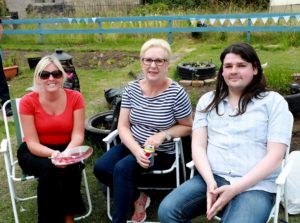 Rachel set up Time to Change (West Cumbria) in 2013 to tackle the rising issue of homelessness and subsequent unemployment in the area. Based in the former police station, Calderwood House has received more than £70,000 in grants from Cumbria Community Foundation since 2013.
The first grant gave Rachel the opportunity to create eight new jobs. She said: “Staff are trained to a high standard to ensure our residents have the best support available to them. Time to Change also offers employment to those who may have been homeless, an ex-offender, or have faced mental health issues or addiction. We recognise our employees with lived experience often go over and above for our residents. I have personally experienced homelessness, drug addiction and severe mental health illness. It makes me who I am. Seeing my recovery and hearing my story gives others hope that there is a bright future out there.”
Another grant supported the purchase of a mobile coffee van from which residents sell its own brand blended coffee. You will often see new member of staff, Deb and Keith with the van at local events fundraising for Calderwood House. The coffee is packaged in-house and sold to the consumer market. For the residents, the purchase of the van not only meant new training but also paid employment.
The world of the homeless is a tough place. More and more people are facing homelessness and housing problems. Calderwood House will continue to save lives and support people at their most vulnerable.
Addiction has no prejudice
“I liked to have a drink and would often have a glass of wine in the evening but then alcohol became my crutch. I found myself opening the wine and drinking the whole bottle.” This is a common statement in our current society and for some it can be the start of a downward spiral.
Alcohol-related hospital admissions in Cumbria are worse than the average for England. Cumbria Alcohol and Drug Advisory Service (CADAS) aims to address and reduce the negative impact of problematic drug and alcohol use on individuals, their families and communities.
 CADAS is at the forefront of tackling drug and alcohol addiction in the county. It is particularly serious in Barrow, which has seen a spike in drug related deaths. People here are more likely to die from drugs than those in Manchester, Liverpool or Lancaster.
Helen Davies, one of the charity’s three clinical supervisors, said alcohol continues to be the substance most affecting local people. But the charity’s staff and volunteers are seeing evidence that people are increasingly mixing their alcohol use with dabbling in cocaine, with potentially damaging long-term consequences. “More people are accessing our service because of cocaine, and there are a lot of people using it recreationally while they are having a night out in town,” said Helen.
Brian, 40, started drinking at the age of 14. He describes his addiction growing from alcohol to ecstasy to cocaine before ending up in jail, where he started using heroin. “When I came out I was stealing from people, I was constantly asking for money. I was manipulating people. I didn’t think I had a problem. I thought I didn’t need recovery and that I could do it my way.”
He stopped using drugs and alcohol and received help from The Well in Barrow and put on the 12-step programme. He had talking therapy with CADAS and ten sessions of black box therapy – a TENS machine stimulates the body’s production of natural endorphins. This helps reduce stress, anxiety, improve sleeping patterns and the body to heal.
Recently, Brian saw his mother for the first time in a while. She said that him walking away that day was the hardest thing she ever saw, because for the first time in her life she wanted him to stay, not leave.
 Over the last 17 years, CADAS has received almost £230,000 in grants from the Foundation. The first grant was awarded in 2003 towards staff supervision and training. In 2014, £30,000 from the NMP Community Fund helped to extend the S.T.A.R.S project in west Cumbria. Two part-time youth development workers were employed to support groups of 11-19 year olds through drug and alcohol school education programmes. It also offered one-to-one support for those worried about their own or others substance misuse.
CADAS uses volunteers to support people through their recovery and reintegration into the community. £24,000 from the United Utilities Legacy Fund employed a Volunteer Coordinator in West Cumbria. More recently, £30,000 was awarded to support the wages of a Recovery Volunteer Coordinator and increase the number of volunteers in Barrow over the next three years.
 Carrie Bertram, CADAS Centre Coordinator, said: “Once trained, our volunteers can change a lot of lives. The intensive fourteen-week training process gives volunteers the skills and understanding to help clients make positive changes in their lives. They see an average of two clients each a week, offering mediation, nutrition and lifestyle support and a signposting service.”
Phil Caine, a CADAS volunteer who became an employee and now coaches people in recovery, said: “Volunteering is part of my own recovery. I live the 12-step programme. I wanted to work with CADAS and use my knowledge of addiction and drugs. There is the behavioural side of addiction, that’s a lot of what we do here, helping people figure out what is underneath the addiction.”
Addiction has no prejudice. It doesn’t discriminate, no matter where you are from, how old you are or what job or school you go to. There is no getting away from the fact that addiction can happen to anyone of us.